
String Lights, Fire Pits, and Heaters: Extending Outdoor Entertaining into Fall
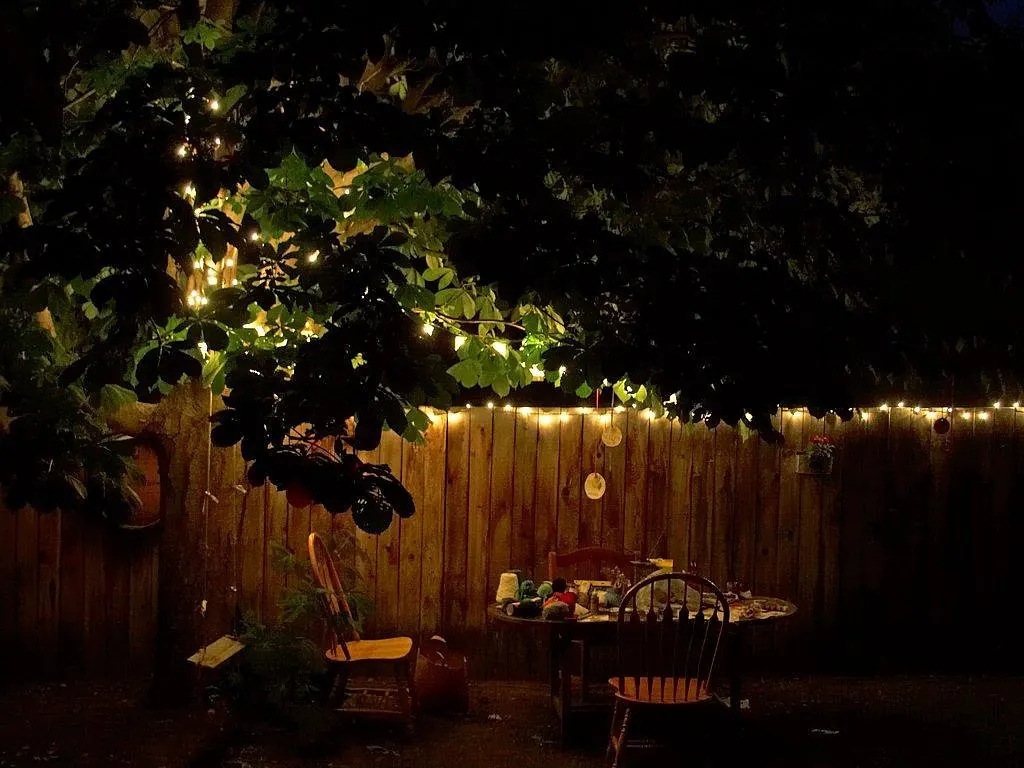
Fall evenings have a way of ending the party early. The plates are still out, the conversation is good, and then someone looks at the sky and says the word "chilly." Nobody wants to be the host who herds guests inside at eight o'clock. You don't need a remodel or a truckload of equipment to buy yourself another two hours on the patio. You need three things working together: light that flatters instead of glaring, heat that reaches people where they actually sit, and a few small comforts that make staying out feel like a choice rather than a dare.
Light the Space Before You Need It
Start turning lights on while the sun is still up. You can see what you're doing, you avoid tripping over cords in the dark, and the transition from daylight to lamplight feels gradual rather than abrupt.
For string lights, think in layers. Overhead strands give you the glow that makes a patio feel like a room. Table lanterns and a few ground-level lights handle tasks — finding your glass, reading a label on a bottle, seeing the edge of a step. A single layer of light leaves faces in shadow and corners invisible.
Warm bulbs matter more than bright ones. Look for warm white rather than cool white; the cool tones read as garage or parking lot, and they make skin look grey. Classic globe or Edison-style bulbs on a heavier cord give usable light. The tiny fairy lights are lovely, but they're decoration, not illumination.
Hang strands roughly eight to ten feet up so nobody walks into them, and zigzag between fence posts, tree trunks, or a pergola rather than running one long line. Every outdoor cord should be rated for outdoor use, plugged into a GFCI outlet, and given a drip loop — a small downward loop of slack near the plug so water runs off instead of into the connection. Don't chain more strands together than the manufacturer allows. A plug-in timer saves you the walk-around at midnight.
Build the Fire Pit as the Anchor
Fire is the reason people lean in. A fire pit doesn't just warm hands; it gives the group a center and a reason to stay put.
Placement is everything. Wood-burning pits throw most of their heat sideways rather than straight out, so guests should sit three to four feet back with their knees toward the flames. Set seating in a loose arc, not a circle, so people can shift closer or ease back without climbing over each other. Keep the pit well clear of low branches, fence lines, furniture, and anything with a roof over it.
Wood or gas is a preference, not a purity test. Wood gives you crackle and smell and takes more work. Gas gives you instant heat and a shutoff valve, which many hosts prefer with kids around. If you burn wood, choose seasoned hardwood — soft, resinous wood throws sparks — and never burn painted or treated lumber. Keep a bucket of water or sand and a shovel within reach, and check local burn rules before you light anything, since many areas restrict open burning in dry autumn weather.
Match the Heater to the Space
Patio heaters are not interchangeable. The tall mushroom-style propane heaters warm the air around them, which then drifts and spreads. They work best in still air on a covered or sheltered patio, and they need ten or fifteen minutes to make a difference. In a breezy yard, much of that heat leaves before it reaches anyone.
Infrared heaters warm people and objects directly instead of the air, so they hold up better in wind. Mounted overhead or on a wall and angled down at the seating, they feel almost instant. They're the better choice for an open deck or a spot where the wind always seems to come from one direction.
Put heat at the edges of the group, not in the middle of it. Mounted infrared units should aim at laps and shoulders, never at faces. Tall propane heaters belong out of the walking path, with the post visible so nobody backs into it.
A safety note worth repeating: any fuel-burning heater produces carbon monoxide. Use them outdoors or in genuinely open, well-ventilated structures only — never in a garage, tent, enclosed porch, or anywhere the air can't move. Follow the manufacturer's clearance distances from walls, ceilings, and furniture, and check the fuel level before guests arrive rather than mid-evening.
Layer Warmth Where People Sit
Heat rises and blows around, but cold travels through contact. A metal chair or a bare stone bench pulls warmth straight out of a guest. Cushions, a rug underfoot, and a windbreak make a bigger difference than most people expect.
- A lidded basket of blankets within arm's reach — people rarely ask, but they'll take one.
- Seat cushions on metal or stone furniture, stored somewhere dry between gatherings.
- An outdoor rug to cut the chill coming up through stone or decking.
- A windbreak: a folding screen, a row of tall planters, or a hedge on the prevailing-wind side.
- Something warm in hand — a mug does as much for perceived comfort as a heater.
Make Staying Out the Easier Choice
Cold-weather entertaining is mostly logistics. Move the drinks station close to the fire instead of leaving it by the kitchen door, and add a second light there so people can see what they're pouring. A thermal carafe of spiced cider, a kettle for cocoa, or mulled wine kept warm on a low burner keeps hands occupied and gives guests a reason to stay put.
Food should hold up without a hot line. Chili, soup served in mugs, skewers, baked potatoes finished in the coals, and anything in a cast-iron pan all survive a cool evening better than delicate plates. Keep serving dishes covered, and don't leave dairy or meat sitting out for hours — bring platters in on a schedule, or keep them over a low warmer.
Then check the practical things before anyone arrives:
- Walk the route from the house to the seating at dusk, with the lights on, and look for dark steps and trailing cords.
- Test every string light run and replace dead bulbs now, not with guests watching.
- Confirm cords are on GFCI outlets with drip loops.
- Check propane levels and heater clearances to walls, ceilings, and furniture.
- Set blankets out where people can reach them without asking.
- Decide in advance when you'd move inside, so the shift happens smoothly if the temperature drops hard.
Test the Coldest Seat
Half an hour before guests arrive, sit in the seat you think is worst — farthest from the fire, in the path of the wind, on the metal chair. If you're cold there, so is everyone who ends up there. Move a heater a few feet, turn the seating arc, add a screen, or shift the whole arrangement closer to the house.
Small rearrangements beat buying more equipment. And if you do buy one thing this season, make it the light. A warm, well-lit patio invites people to linger long before the temperature becomes the excuse.
Photo: PDPhotos / Pixabay