
The Beginner's Guide to Hosting a Backyard Dinner Party
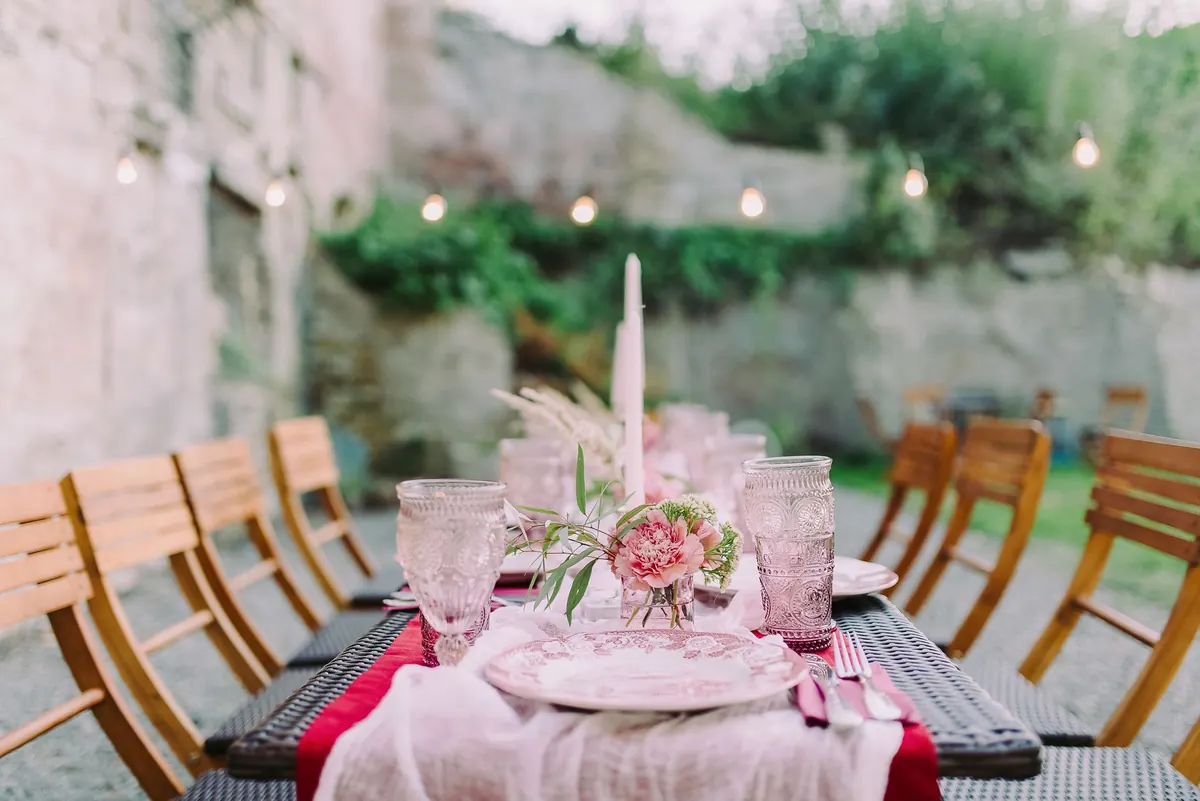
Your first backyard dinner party doesn't need a theme, a rented tent, or a menu that reads like a restaurant's. It needs a table people can sit at, enough light to see their food, and an answer ready for the moment the sky changes its mind. Everything past that is polish. Here is the working plan: seating, lighting, food, weather, and a rhythm for the night, so you spend the evening with your guests instead of in the kitchen. The goal is not perfection. It is a table full of people who feel comfortable enough to stay for one more story.
Start With the Table, Because It Decides Everything Else
Choose your guest count before your menu. Six to eight people is the sweet spot for a first attempt: one good conversation and a table you can reach across. Ten is doable if you have the chairs, but it splits into two conversations and doubles the serving dishes. Beyond that, you need a second table, more chairs, and a serving line, which is a different kind of project.
You don't need a long wooden farm table. Two folding tables pushed together and covered with a single cloth read as intentional. A flat bedsheet or a length of inexpensive fabric works, because the seam disappears and nobody inspects the legs. Mismatched chairs are fine, as long as they sit steadily on grass. On soft ground, slide a small square of plywood under each leg so nobody tilts backward mid-sentence. If the lawn is uneven, test every chair yourself before guests arrive; a wobbly seat is the fastest way to make someone feel like a guest at a picnic instead of a dinner party.
Leave Room to Move
Plan on two feet between the backs of facing chairs. That sounds fussy until you watch a guest try to climb out over a bench. Sit near the kitchen door, at the end of the table, so you can slip away without making four people stand up. Keep the serving table close, but not so close that people bump it every time they scoot in.
Lighting Does More Than Any Centerpiece
One bright porch light overhead flattens faces and makes everyone squint. Use two or three smaller sources at different heights instead: string lights along a fence, a lantern on the table, a candle in a glass hurricane on the sideboard. The point is not to light the yard like a stadium. It is to make the table feel like a room without walls.
Warm-white string lights are the easy answer. Hang them about seven feet up so they clear heads, and test them after dark the night before. Candles are welcome only in holders with walls high enough to survive a breeze. On a windy night, switch to battery lanterns without apology. Light the path to the bathroom and the trash, because guests won't ask where things are until after they've tripped over the cooler. A small lantern near the drink station also keeps people from pouring wine in the dark.
Keep the Bugs Bored, Not Your Guests
Bugs are part of the backyard, but you can make your party less interesting to them. Put a fan on the ground near the table; even a gentle breeze keeps mosquitoes from settling. Cover food between servings, keep sweet drinks capped, and skip heavily scented candles and perfumes. Citronella works only when it is close and moving, so place a few candles or torches upwind, not directly beside the plates. If the bugs are truly terrible, move dinner earlier and save dessert for after dusk.
Build the Menu Backwards From Your Oven Time
The rule that saves first-time hosts: no more than one dish that needs cooking in the final half hour. Fill the rest from these categories.
- One room-temperature main: roast chicken, a grain and bean salad, a platter of grilled vegetables
- One hot dish that holds: baked pasta, braised meat, a sheet pan of potatoes that can wait in a low oven
- One cold, crisp thing: slaw, sliced tomatoes, cucumbers with yogurt
- One thing you bought: good bread, a decent cheese, olives, a cake from the bakery
- One drink and one backup: a pitcher of something, plus a cooler of cans for guests who want something else
Write the menu down and mark what can be made a day ahead. Most of it can: dressings, sauces, and sturdy salads improve after a few hours in the fridge, while tomatoes and bread wait until an hour before. Watch temperatures as the evening goes on. Keep cold dishes on ice, keep hot dishes covered and warm, and don't leave perishable food sitting out for hours. When in doubt, pour it out and bring out the backup dessert. If you know someone is vegetarian or avoiding gluten, make one dish that already fits and label it clearly, rather than expecting them to assemble a meal from side dishes.
Set the Food Up Like a Small Restaurant
Guests form a line whether you plan one or not, so plan one. Keep drinks on a separate table from the food; that single separation prevents the worst crowding of the night. Raise the cooler onto a bench or chair so it opens toward the guest instead of at knee height.
- Plates and napkins first
- Cold dishes, so they don't warm up while people talk
- Hot dishes, with serving spoons already in them
- Bread and condiments
- Flatware at the end, so nobody juggles a fork while serving
- A small bowl or bag for used napkins, right on the table
Fill the water glasses before anyone arrives. Leave the corkscrew where it can be found by anyone, not just you. Put a trash bag and a recycling bin where guests can see them, and set out a stack of towels for spills. A roll of paper towels on the serving table is not elegant, but it is far more useful than a linen napkin when someone knocks over a glass of red wine.
Weather and the Graceful Pivot
Check the forecast the morning of, then stop checking. Have a plan that takes two minutes to execute. If rain is likely, clear a path inside before guests arrive: move the coffee table, push the sofa back, and decide where the food will go. A pop-up canopy can save a light drizzle, but do not tie yourself in knots over a storm. If the sky opens, say the sentence out loud: "Everybody grab your plate and head inside." People relax when the host is not apologizing.
Heat and cold deserve the same treatment. For a hot evening, start an hour later, offer plenty of water, and put the food in the shade. For a cool one, set a basket of blankets near the chairs and serve something warm to drink. You do not need to control the weather, only to show your guests that you thought about it.
The party is not the weather. The party is the people who stay until the candles burn down.
A Simple Timeline for the Day
Hosting gets easier when you stop treating the party as one big event and treat it as a series of small ones. Here is a timeline that works for almost any backyard dinner.
- Morning: shop, make the dressing, chill the drinks, and set the table if the weather is stable.
- Afternoon: arrange chairs, hang lights, test the music, and tidy the bathroom guests will use.
- One hour before: ice the cooler, fill water glasses, put out trash bags, and take a shower.
- Fifteen minutes before: set out cold dishes, light candles, and put on the playlist.
- When guests arrive: hand them a drink and sit down as soon as the food is out.
- After: refrigerate leftovers within two hours, soak dishes, and leave the rest for tomorrow.
The best hosts are not the ones who did the most. They are the ones who are actually at the table. If you can sit down while the food is still warm and nobody has to ask where the forks are, your first backyard dinner party is already a success.
Photo: Dmitry Zvolskiy / Pexels